For most travelers visiting central Vienna, boutique hotels are the more reliable accommodation choice. They tend to perform better because of their location, walkability, consistency, and overall ease of travel. In a compact city like Vienna, these factors usually matter more than extra space on short stays.
Airbnb can still work well, especially for longer stays or for travelers who prioritize independence and larger living areas. However, the experience is inherently less predictable because quality, layout, and location vary significantly between listings.
In practice, Vienna rewards simplicity. Staying centrally reduces friction, improves walkability, and creates a smoother overall experience across the city’s main cultural districts and attractions.
How Vienna Works as a City
Vienna is a compact and highly structured city, where most major attractions are concentrated in and around the Innere Stadt, the Ringstrasse, and the Museum Quarter.
Because of this layout, the city is experienced primarily on foot. Cafés, museums, opera houses, historic streets, and cultural landmarks sit close to one another, making daily movement feel continuous rather than dependent on transportation.
That changes the role of accommodation. Where you stay directly shapes how the city flows day to day. A central location keeps everything connected, while a peripheral stay introduces additional travel time and fragments the rhythm of the experience.
In Vienna, proximity is not just a convenience. It influences the continuity, efficiency, and overall atmosphere of the trip.
If you are still deciding on the best district, our guide on Where to Stay in Vienna for First-Time Visitors provides a deeper breakdown of each area.
Boutique Hotels vs Airbnb in Vienna: The Core Difference
The main difference between boutique hotels and Airbnb in Vienna is not price or space. It is consistency versus variability.
| Boutique Hotels | Airbnb Apartments |
| Consistent hospitality standards | Quality varies by listing |
| Central, curated locations | Mixed location quality |
| Professional housekeeping | Self-managed experience |
| Predictable comfort levels | Inconsistent standards |
| Optimized for short stays | Often better for longer stays |
Boutique hotels operate as purpose-designed hospitality environments. This includes professional service, curated interiors, reliable maintenance, and locations selected specifically for access to Vienna’s cultural core. The result is a stable and low-friction experience, particularly valuable on shorter visits.
Airbnb, by contrast, functions as distributed residential accommodation. Some apartments are excellent and exceptionally well located, while others vary considerably in layout, responsiveness, comfort, and maintenance quality. The experience depends less on the city itself and more on the individual property.
Vienna tends to amplify that difference. The city is orderly, calm, and highly functional, so accommodation that feels inconsistent or poorly integrated stands out more noticeably than it might elsewhere.
For travelers comparing different hospitality styles, you can also explore our full comparison between Boutique Hotels vs Luxury Hotels in Vienna.
Where Boutique Hotels Perform Better
Central Location and Walkability
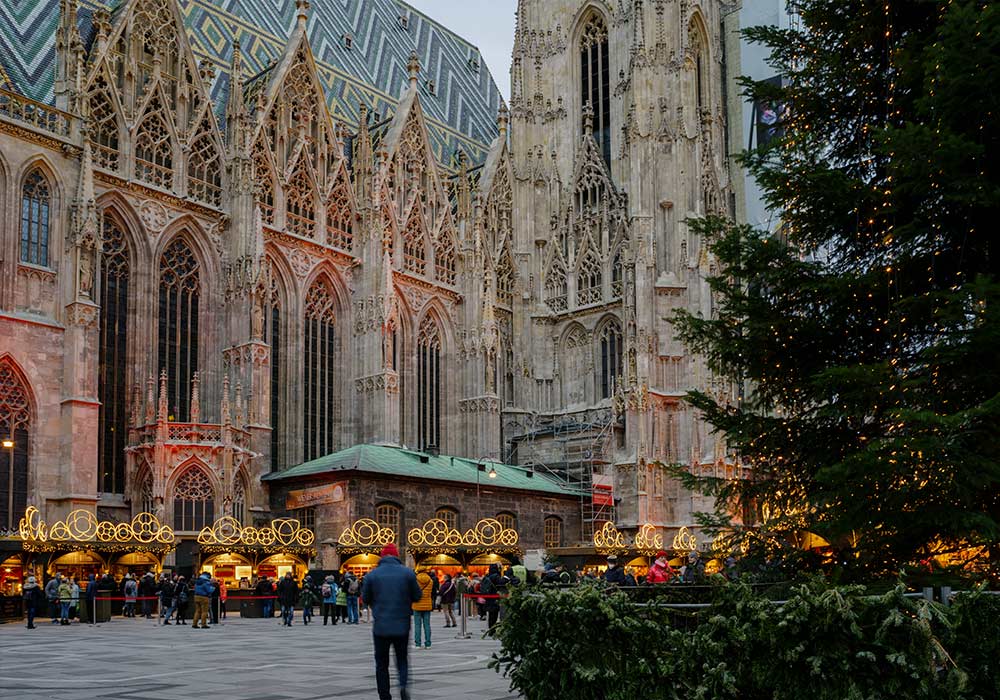
Boutique hotels in Vienna are often located in or near the Innere Stadt, placing guests within walking distance of landmarks such as Stephansplatz, the Vienna State Opera, and the Museum Quarter.
That proximity changes how the city is experienced. Instead of planning transportation throughout the day, travelers can move naturally between cafés, museums, shopping streets, and evening venues entirely on foot.
For short stays especially, this level of accessibility significantly improves time efficiency and overall comfort.

Consistency and Comfort
Boutique hotels generally provide a more predictable standard of comfort than Airbnb accommodations. This includes reliable housekeeping, quieter environments, professional support, and more consistent standards in bedding, cleanliness, and maintenance.
With Airbnb, the experience can vary substantially depending on the building and host. In older Viennese residential properties especially, factors such as sound insulation, layout efficiency, and climate control can noticeably affect comfort.
That variability is not necessarily problematic, but it does create less certainty around the overall stay experience.
Fit With Vienna’s Atmosphere
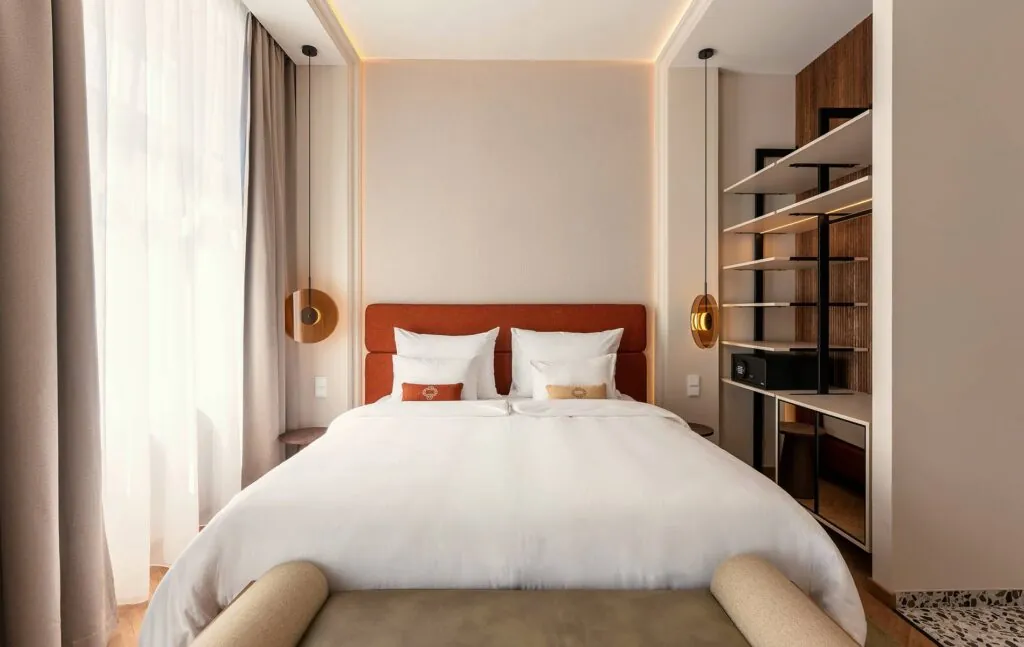
Vienna has a calm, architectural, and highly structured identity. The best boutique hotels tend to reflect that atmosphere naturally, often through restored historic buildings, understated interiors, and a quieter hospitality style.
Rather than feeling detached from the city, these hotels often feel integrated into it.
Hotels such as LOVIS follow this approach, offering a more intimate, design-focused stay close to Vienna’s cultural center while maintaining the calm atmosphere that defines the city itself.

Where Airbnb Can Still Make Sense
Airbnb can still be an excellent option in Vienna depending on the type of trip and travel priorities, especially when flexibility, independence, or additional living space matter more than central location.
It often works well for longer stays where kitchens, laundry facilities, and larger living areas become more important. It is also practical for families or groups who prefer staying together in a single apartment rather than booking multiple hotel rooms.
Travelers looking for more independent, self-catered accommodation sometimes also explore Vienna apartment rentals outside traditional hotel districts, particularly in quieter residential neighborhoods beyond the historic center.
However, these advantages come with trade-offs.
Locations are often less central, increasing reliance on public transportation and adding more movement between daily activities. Standards also vary considerably between listings.
In Vienna specifically, many Airbnb apartments are located in older residential buildings that were not originally designed for short-term hospitality use. This can affect sound insulation, layout functionality, climate control, and overall comfort.
While some properties are excellent, others feel closer to adapted housing than professionally optimized accommodation.
The key difference is reliability. Boutique hotels deliver consistency, while Airbnb offers greater variation.
Cost vs Overall Experience in Vienna
Airbnb often appears cheaper at first glance, but Vienna is a city where location significantly changes the value equation.
When you stay centrally, the entire trip becomes easier. You walk more, plan less, and move fluidly between museums, cafés, shopping streets, concerts, and historic areas.
When you stay farther from the center, the day becomes more segmented. Entering the city, spending time there, and returning afterward begin to feel like separate stages rather than one continuous experience.
That difference becomes especially noticeable in the evenings, when returning directly to a centrally located hotel after dinner, an opera performance, or a concert feels simple and effortless.
For itinerary planning, see our 3 Days in Vienna (3-Day Itinerary) guide.
Final Recommendation
For most travelers — especially first-time visitors or those staying in Vienna for a shorter trip — boutique hotels in central locations provide the most seamless and efficient overall experience.
They align naturally with how Vienna is best explored: on foot, within concentrated cultural districts, and at a slower, more immersive pace.
Airbnb remains a strong alternative for longer stays or for travelers who prioritize space, flexibility, and residential-style living. However, it is generally less consistent in delivering the well-connected, low-friction experience that defines a high-quality short stay in Vienna.
Ultimately, the decision comes down to priorities: seamless city access and hospitality consistency, or greater space and independence.
| Travel Style | Better Option |
| First-time visitors | Boutique hotel |
| Short city breaks | Boutique hotel |
| Romantic stays | Boutique hotel |
| Design-focused stays | Boutique hotel |
| Long-term stays | Airbnb |
| Families needing extra space | Airbnb |
| Remote work stays | Airbnb |
| Travelers prioritizing kitchens | Airbnb |
FAQ
Are boutique hotels better than Airbnb in Vienna?
For most short stays in central Vienna, boutique hotels are generally the stronger option. They combine walkability, consistent hospitality, quieter environments, and easier access to major cultural landmarks.
Is Airbnb cheaper than hotels in Vienna?
It can be, especially for longer stays or larger groups. However, centrally located boutique hotels often deliver stronger overall value once convenience, walkability, and location efficiency are considered.
What is the best area to stay in Vienna?
The Innere Stadt (1st District) is usually the most convenient area for first-time visitors because it contains the city’s highest concentration of landmarks, museums, cafés, shopping streets, and historic attractions.
For a deeper breakdown of Vienna’s districts, see our guide on Where to Stay in Vienna for First-Time Visitors.
Are boutique hotels good for first-time visitors to Vienna?
Yes. Boutique hotels are particularly well suited for first-time visitors because they reduce logistical friction and keep travelers close to Vienna’s primary cultural and historic areas.
For a broader overview, see our guide to the Best Boutique Hotels in Vienna City Center.
Is Vienna a walkable city?
Yes. Vienna’s central districts are highly walkable, and most major attractions are located within a compact and pedestrian-friendly area.
For itinerary planning, see our 72 Hours in Vienna (3-Day Itinerary) guide.
Why are boutique hotels popular in Vienna?
Because they align naturally with Vienna’s calm, structured, and culturally dense atmosphere, where location, walkability, architecture, and overall experience often matter more than space alone.