How to Experience Vienna in 72 Hours
If you only have 3 days in Vienna, the most efficient approach is to stay in the city centre (Innere Stadt) and explore on foot through structured walking routes, with this Vienna itinerary.
Vienna is compact, and most major landmarks are concentrated in the historic core, allowing you to experience imperial palaces, museums, cafés, and cultural streets without relying on transport.
This itinerary is designed to:
- maximize landmark density within walking distance
- reduce time spent commuting
- connect imperial Vienna, museum districts, and café culture
- create a natural 72-hour walking flow across the city
Best Time to Visit Vienna
Vienna offers a strong year-round travel experience, but each season changes the atmosphere, pricing, and walking conditions.
| Season | Best For | Pros | Cons |
| Spring (Apr–Jun) | First-time visitors, sightseeing | Mild temperatures (10–22°C), blooming parks, long daylight, fewer crowds | Occasional rain, rising prices in late spring |
| Summer (Jul–Aug) | Festivals, nightlife | Warm to hot (25–35°C), outdoor events, long evenings | Peak crowds, highest hotel prices |
| Autumn (Sep–Oct) | Culture & photography | Comfortable (10–20°C), fewer tourists, golden colors | Shorter days, unpredictable rain |
| Winter (Nov–Feb) | Christmas markets & budget travel | Cold (0–5°C), festive atmosphere, lower prices in Jan–Feb | Short daylight, grey weather outside December |
Quick decision guide
- Spring or Autumn → best overall balance for sightseeing
- Summer → best for festivals and nightlife
- December → most festive (Christmas markets)
- January–February → best value
Vienna Spatial Logic (How the City Actually Works)
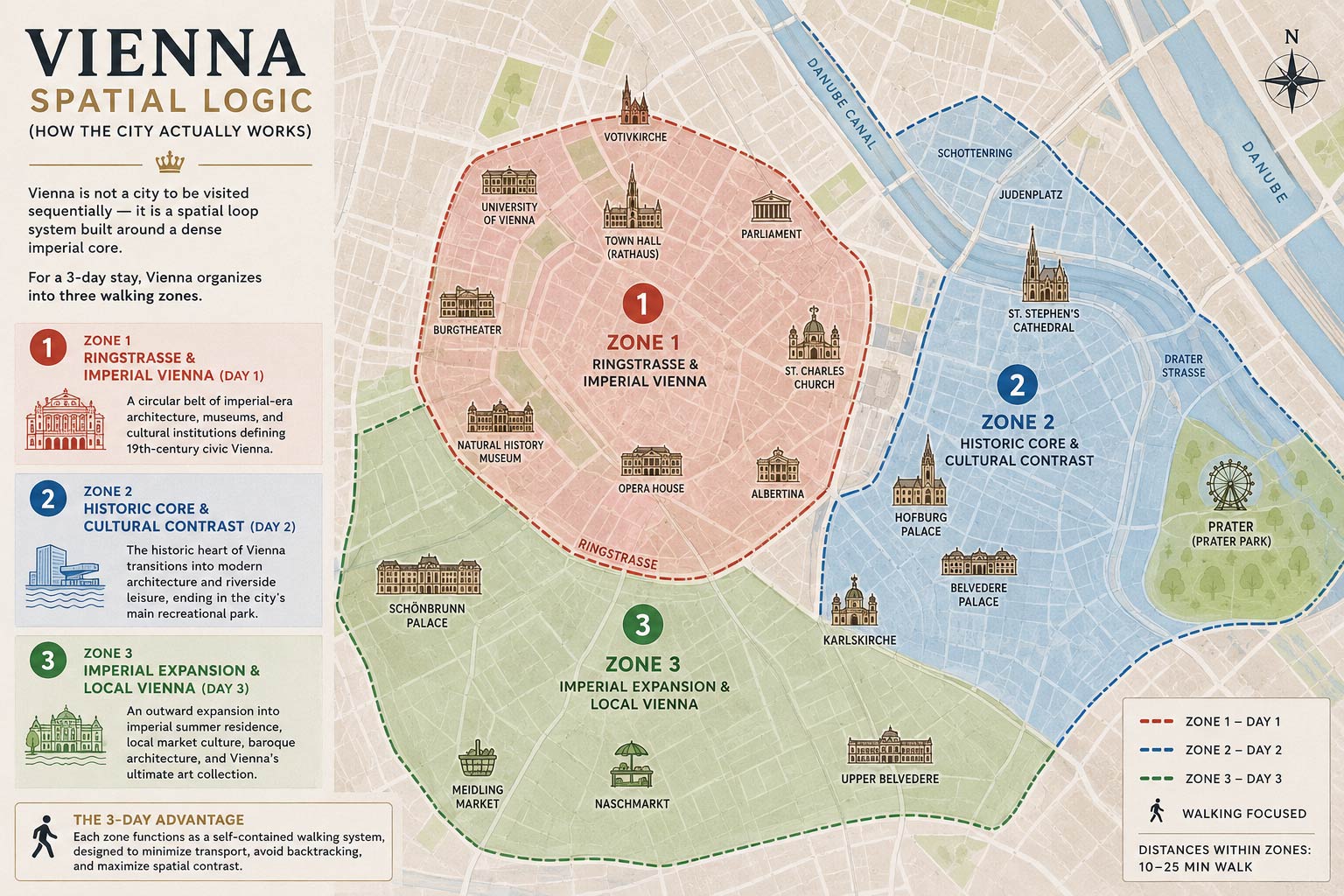
Vienna is not a city to be visited sequentially — it is a spatial loop system built around a dense imperial core. For a 3-day stay, Vienna organizes into three walking zones:
Zone 1 – Ringstrasse & Imperial Vienna (Day 1)
A circular belt of imperial-era architecture, museums, and cultural institutions defining 19th-century civic Vienna.
Zone 2 – Historic Core & Cultural Contrast (Day 2)
The historic heart of Vienna transitions into modern architecture and riverside leisure, ending in the city’s main recreational park.
Zone 3 – Imperial Expansion & Local Vienna (Day 3)
An outward expansion into imperial summer residence, local market culture, baroque architecture, and Vienna’s ultimate art collection.
This is what makes a Vienna 3 day trip highly efficient: each zone functions as a self-contained walking system, designed to minimize transport, avoid backtracking, and maximize spatial contrast.
Vienna Itinerary Day 1 – Ringstrasse & Imperial Vienna
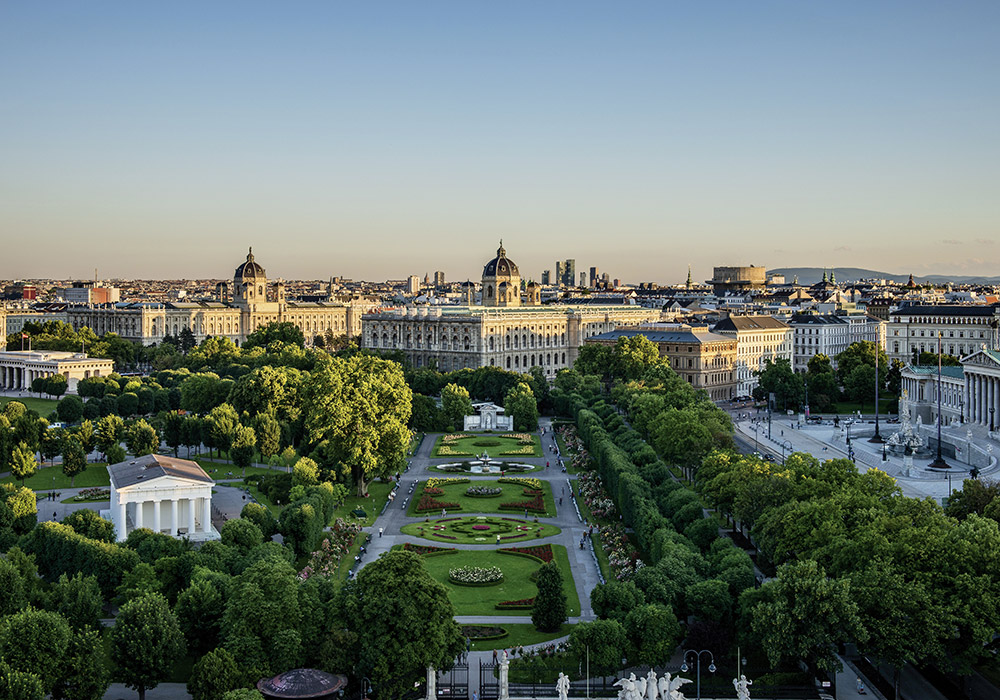
This 1-day Vienna travel itinerary follows the Ringstrasse, the city’s imperial boulevard that connects civic, political, cultural, and artistic landmarks in one continuous walking experience.
Day 1 Route Overview
Votivkirche
University of Vienna
Rathaus
Burgtheater
Austrian Parliament
Volksgarten
Maria-Theresien-Platz (Kunsthistorisches Museum or Naturhistorisches Museum)
MuseumsQuartier
Burggarten
Wiener Staatsoper
Votivkirche & Academic District
Start your Vienna 3 day trip at Votivkirche, one of the finest neo-Gothic churches in Vienna.
Walk through:
- University of Vienna — Central Europe’s historic intellectual hub
- Rathaus — neo-Gothic city hall
- Burgtheater — Austria’s national theatre
- Austrian Parliament — neoclassical landmark inspired by ancient Greece
Now that you’ve explored Civic Vienna, continue to Volksgarten, a former imperial garden.
Maria-Theresien-Platz & Imperial Museums
Continue toward Maria-Theresien-Platz, an imperial square with twin museum palaces.
- Kunsthistorisches Museum — masterpieces by Caravaggio, Vermeer, and Bruegel
- Naturhistorisches Museum — dinosaurs, meteorites, and rare natural history collection
Both are world-class institutions, but time allows for only one visit in a short itinerary.
MuseumsQuartier Vienna
A few minutes away lies MuseumsQuartier, one of the largest cultural complexes in the world, filled with cafés, architecture, and creative installations.
Key highlights:
- Mumok — largest contemporary art museum in Central Europe
- Leopold Museum — masterpieces by Klimt, Schiele, and Kokoschka
Burggarten
After exploring the museum district, make a short stop at the Burggarten, a peaceful garden within central Vienna. Don’t miss the historic greenhouse (Palmenhaus) and the Mozart Statue.
Wiener Staatsoper
End the day at the prestigious Wiener Staatsoper. You can opt for a guided tour or an evening performance (recommended).
If you choose the second option and haven’t booked in advance, standing tickets are available on the day (early morning or ~80 minutes before the performance) for ~€20.
Vienna Itinerary Day 2 – Imperial Core & Cultural Contrast
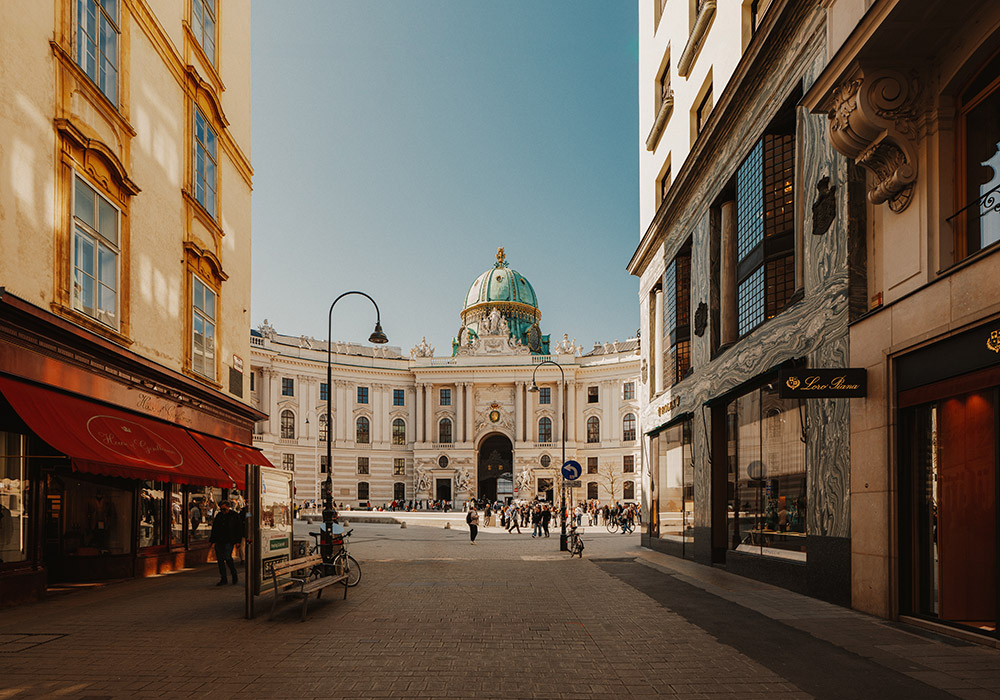
This day explores Vienna’s medieval heart and baroque city center, connecting imperial residences, pedestrian streets, and cultural contrasts in a compact walking loop through the Innere Stadt.
Day 2 Route Overview
Hofburg Palace
Sisi Museum
Spanish Riding School
Prunksaal
Kohlmarkt and Graben
St. Peter’s Church
St. Stephen’s Cathedral
Hundertwasser
Prater (Wurstelprater)
Hofburg Palace
The second day of the Vienna travel itinerary starts at Hofburg Palace, the former winter residence of the Habsburgs and the political center of the empire.
Key highlights:
- Imperial Apartments
- Sisi Museum
- Spanish Riding School — world-famous for classical dressage performances
- Prunksaal — a beautiful baroque library
Historic City Centre Walk
After exploring the different areas of the complex, head to Michaelerplatz and continue through Vienna’s most iconic streets:
- Kohlmarkt — luxury historic street
- Graben — baroque city boulevard
- Plague Column — central religious monument
- St. Peter’s Church — baroque interior highlight
St. Stephen’s Cathedral
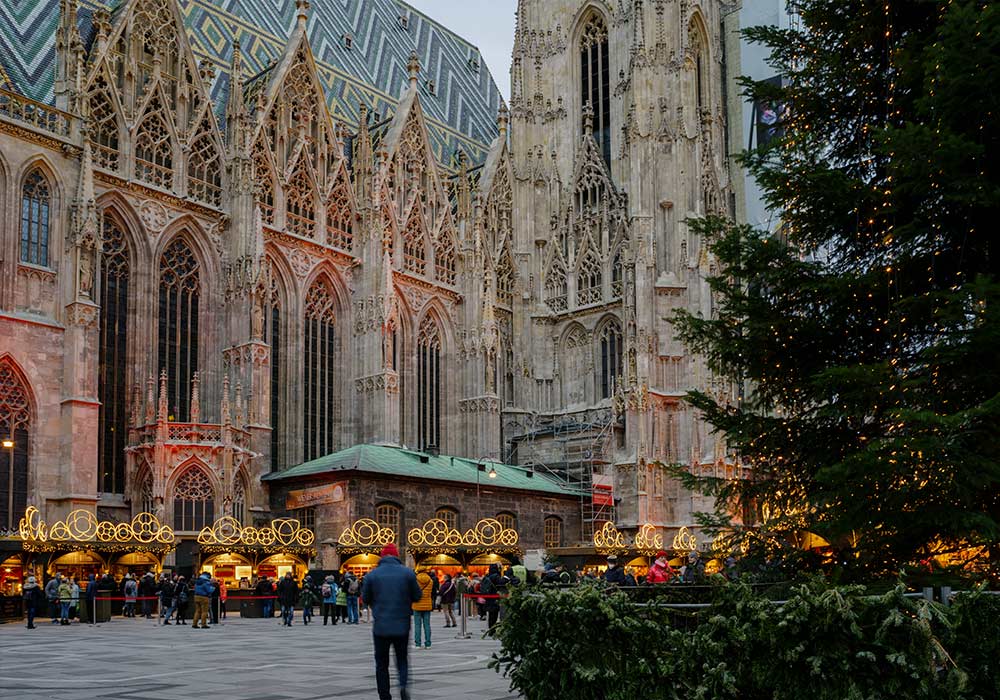
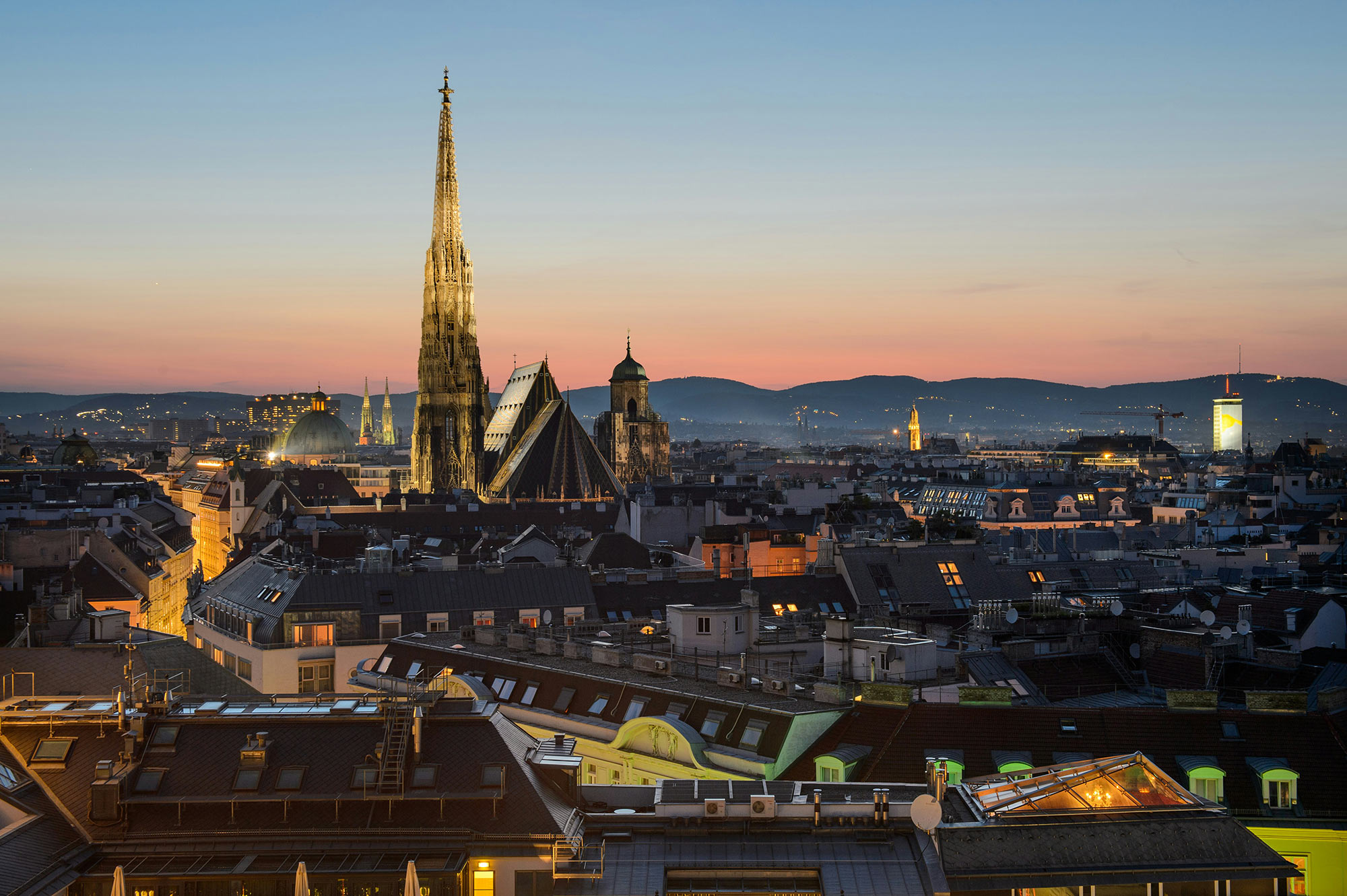
Arrive at St. Stephen’s Cathedral, the symbolic center of Vienna and a Gothic landmark known for its multicolored tiled roof.
Free entry. To access the tower and enjoy panoramic views over the city, you need a ticket (~€8).
Hundertwasser House
Save some time and take the U-Bahn line U1 to reach the Hundertwasser House, a distinctive landmark known for its organic forms, irregular lines, and vivid colors that deliberately break classical symmetry.
Don’t miss the souvenir shop right next to it, integrated into a similarly designed building.
Prater
Head to the Danube Canal and walk along the riverside stretch with street art and an atmospheric evening mood that naturally leads into the final stop of the day — Prater.
This 18th-century park is home to the Wurstelprater, widely regarded as one of the oldest operating amusement park areas in the world.
Free admission.
Day 3 Vienna Itinerary— Imperial Expansion & Local Vienna
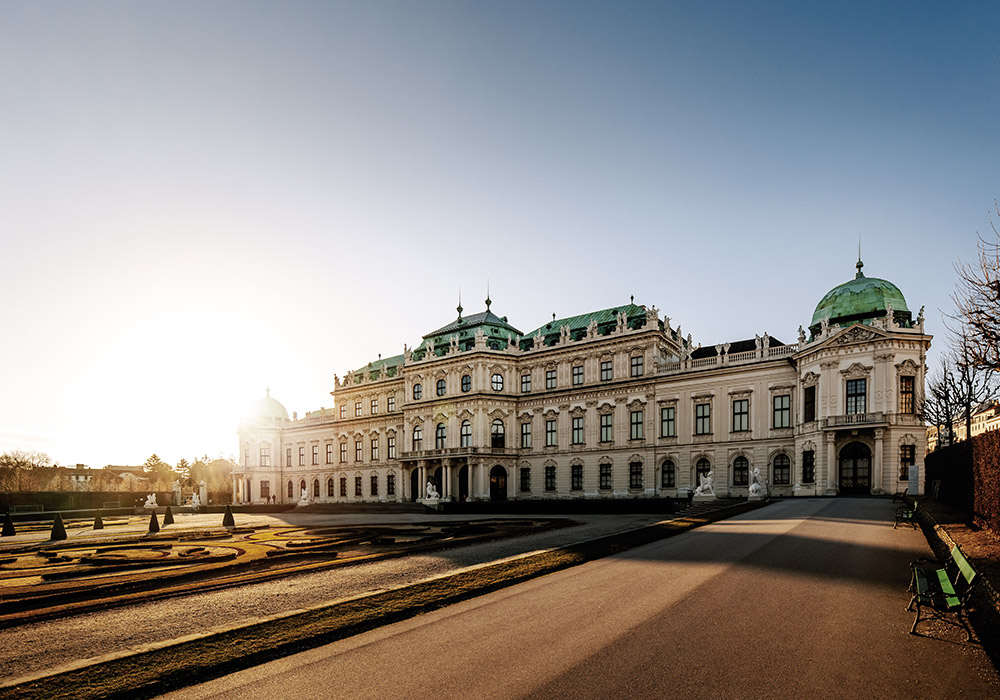
This third day expands beyond the historic core, connecting Vienna’s most important imperial palace with local markets, baroque landmarks, and artistic heritage.
Day 3 Route Overview
Schönbrunn Palace & Gardens
Naschmarkt
Karlskirche
Belvedere (Upper & Lower)
Schönbrunn Palace
Wake up early and take the U-Bahn line U4 (~€3.20) from the city center to Schönbrunn Palace, a UNESCO World Heritage Site.
This is the most time-intensive visit of the entire itinerary.
Key highlights:
- Imperial Apartments — lavish rococo interiors
- Schönbrunn Gardens — extensive formal gardens
- Gloriette — panoramic viewpoint
- Schönbrunn Zoo — world’s oldest zoo
Naschmarkt
Before heading to your next historic landmark, stop at Naschmarkt, Vienna’s famous open-air market and a vibrant hub of local life, where you’ll find international food and local products.
Karlskirche
Continue to Karlskirche, an impressive baroque church with monumental central dome, symmetrical columns inspired by Roman architecture and interior frescoes.
Belvedere Palace
End your 3-day Vienna itinerary at Belvedere Palace, the perfect final highlight.
- Upper Belvedere — home to The Kiss by Gustav Klimt
- Lower Belvedere — former imperial residence with temporary exhibitions
Vienna Attractions – Tickets, Prices & Opening Hours
Now that you know what to do in Vienna in 3 days, it’s time to book your tickets.
| Attraction | Price | Opening Hours | Closed | Vienna City Pass | Tickets |
| Kunsthistorisches Museum Imperial art collection | €18 – €22 | 10 AM 6 PM | Monday | ✔ | Official Website |
| Naturhistorisches Museum Natural history collection | €18 . | 9:00 AM 6:00 PM | Tuesday | ✔ | Official Website |
| Hofburg Palace Imperial apartments + Sisi Museum | €20 – €25 | 9:00 AM 5:30 PM | None | ✔ | Official Website |
| Belvedere Palace Upper palace + Lower palace | €16 – €20 | 10:00 AM6:00 PM | Monday | ✔ | Official Website |
| Schönbrunn Palace Summer residence + gardens | €22 – €32 | 8:30 AM5:00 PM | None | ✔ | Official Website |
| Vienna State Opera Tours & performances | €20. | Varies | None | ✖ | Official Website |
Vienna City Pass
The Vienna City Pass gives access to 70+ attractions in Vienna, skip-the-line entry and optional transport benefits. It is ideal for visitors planning multiple museum visits in a short stay, as it reduces both cost and waiting time.
For stays of 4+ nights, some boutique hotels — including LOVIS — may offer Vienna City Pass benefits, depending on availability and booking conditions.
Always verify details via the official Vienna Tourist Board, which provides updated information on attractions, transport, and events.
Common Mistakes to Avoid
Staying outside the city centre
Reduces walkability and adds transport time. For first-time visitors, central accommodation significantly improves the experience. If you are still deciding where to stay, check our guide on where to stay in Vienna for first-time visitors.
Overplanning the itinerary
Vienna is not a checklist city. Trying to see everything in 48 hours usually leads to rushing between attractions without actually experiencing them.
Skipping key attractions
Don’t miss Schönbrunn Palace, Belvedere, and St. Stephen’s Cathedral — they define Vienna’s identity.
Not booking major attractions in advance
Top attractions like Schönbrunn Palace, Belvedere, and the Wiener Staatsopercan sell out or have long queues — especially in high season.
Not getting a Vienna City Pass
If you plan to visit multiple attractions, get a Vienna City Pass. It can significantly reduce costs, includes skip-the-line access, and simplifies planning.
Underestimating walking distances and weather
You will walk for hours daily. Wear comfortable shoes and dress for the weather — summers can reach 30–35°C, while winters often drop to 0°C or below.
Skipping Viennese food culture
Many travellers miss essential local experiences by not planning food stops properly.
Don’t leave Vienna without trying the traditional Viennese cuisine.
FAQ
Is 3 days enough for Vienna?
Yes, if you focus on the historic centre and follow a structured Vienna walking itinerary.
What is the best area to stay in Vienna?
The Innere Stadt is the most efficient base for Vienna sightseeing. For a more detailed breakdown of districts and travel styles, see our guide for first-time visitors.
Do you need transport in Vienna?
Occasionally. Most key attractions are within walking distance of each other.
What should I not miss in Vienna in 3 days?
St. Stephen’s Cathedral, Hofburg Palace, the Ringstrasse, MuseumsQuartier, and Prater.